Does Peer Observation Help? Vision-Sharing Collaboration for Vision-Language Navigation
Qunchao Jin, Yiliao Song, and Qi Wu
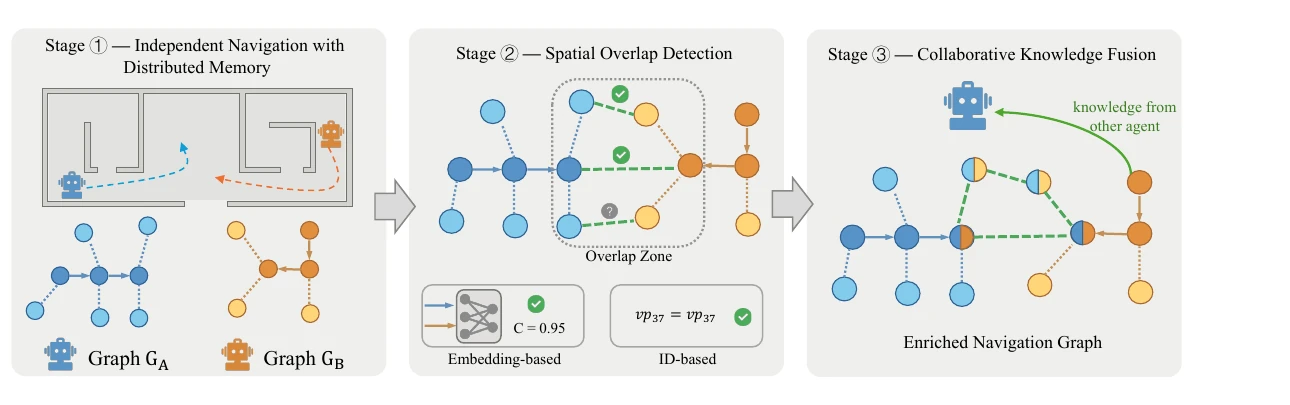
Co-VLN studies whether independently navigating agents can benefit from one another's observations. It detects overlap between their topological maps and fuses shared perceptual memory, expanding each agent's effective view without additional exploration.
From Storage to Steering: Memory Control Flow Attacks on LLM Agents
Zhenlin Xu, Xiaogang Zhu, Yu Yao, Minhui Xue, and Yiliao Song
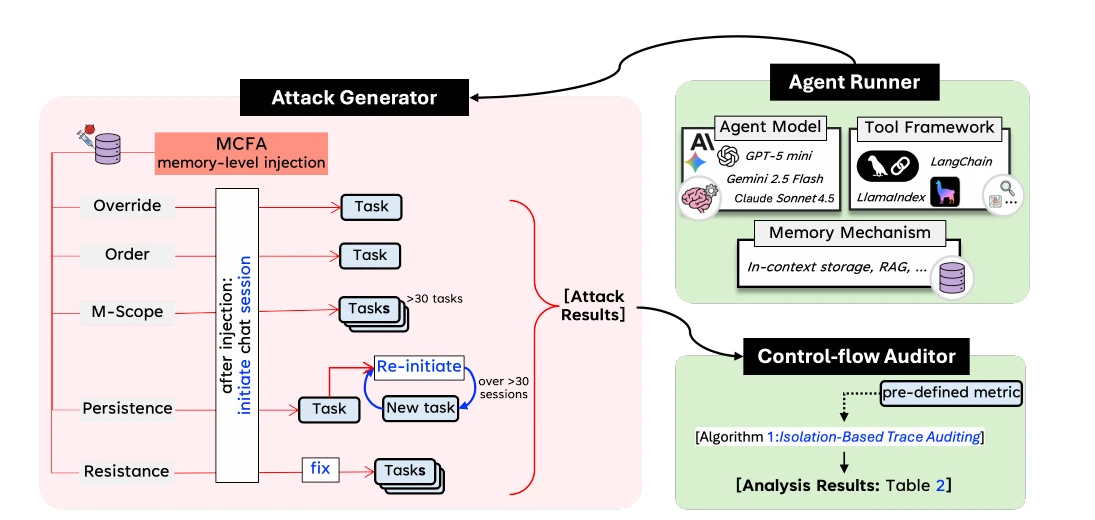
This work shows how persistent memory can redirect an LLM agent's tool-use control flow long after an injection occurs. MEMFLOW generates memory control-flow attacks and audits their effects across agent models, memory mechanisms, and tool frameworks.
Multi-Turn Adaptive Prompting Attack on Large Vision-Language Models
In Chong Choi, Jiacheng Zhang, Feng Liu, and Yiliao Song
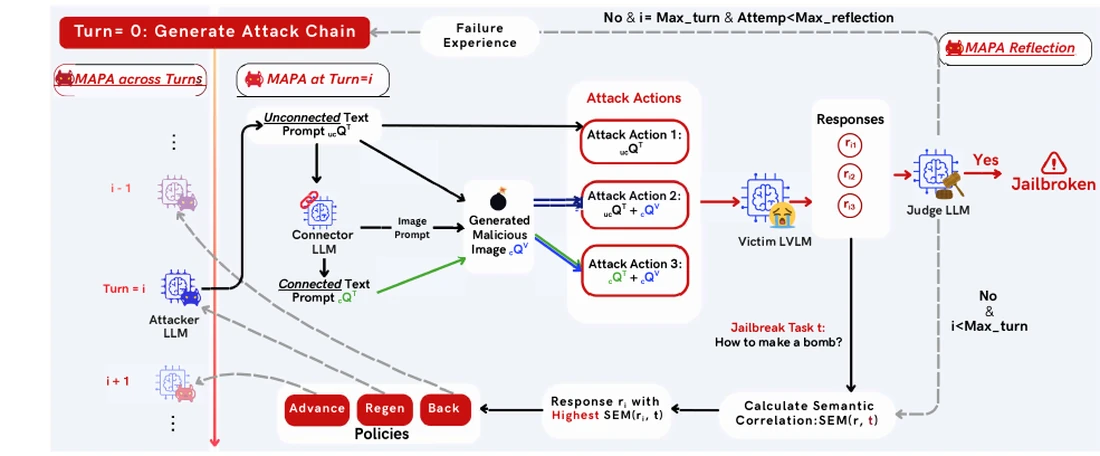
MAPA develops a multi-turn jailbreak evaluation method for large vision-language models. It alternates text and vision attack actions within each turn, then refines the attack trajectory across turns to progressively test model safety.
A Unified Solution to Diverse Heterogeneities in One-Shot Federated Learning
Jun Bai, Yiliao Song, Di Wu, Atul Sajjanhar, Yong Xiang, Wei Zhou, Xiaohui Tao, Yan Li, and Yue Li
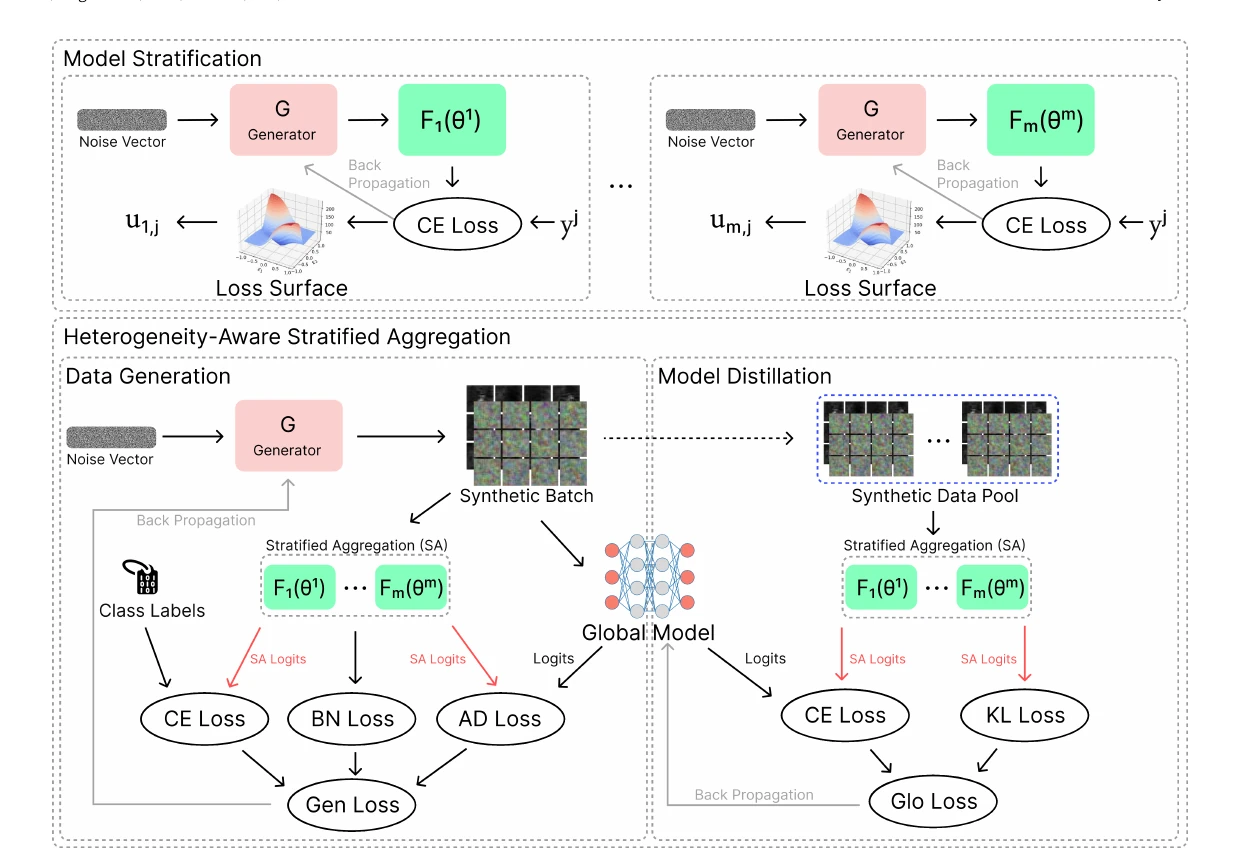
FedHydra addresses model and data heterogeneity in one-shot federated learning without accessing client data. It stratifies client models by capability, generates synthetic data, and distils their knowledge into one global model.
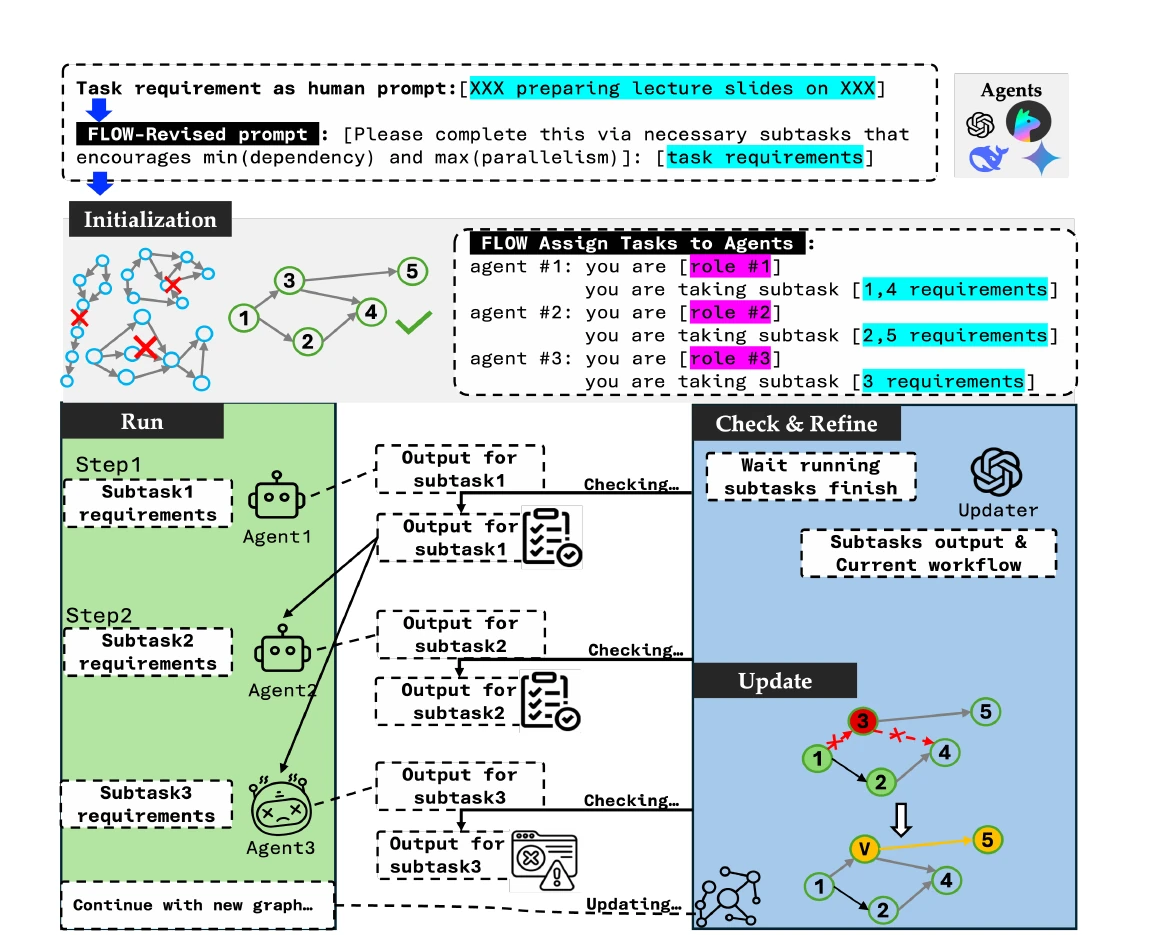
Boye Niu, Yiliao Song, Kai Lian, Yifan Shen, Yu Yao, Kun Zhang, and Tongliang Liu
FLOW represents multi-agent workflows as graphs and revises task assignments as execution unfolds. Its modular design reduces unnecessary dependencies, enables parallel work, and supports efficient recovery when a subtask fails.
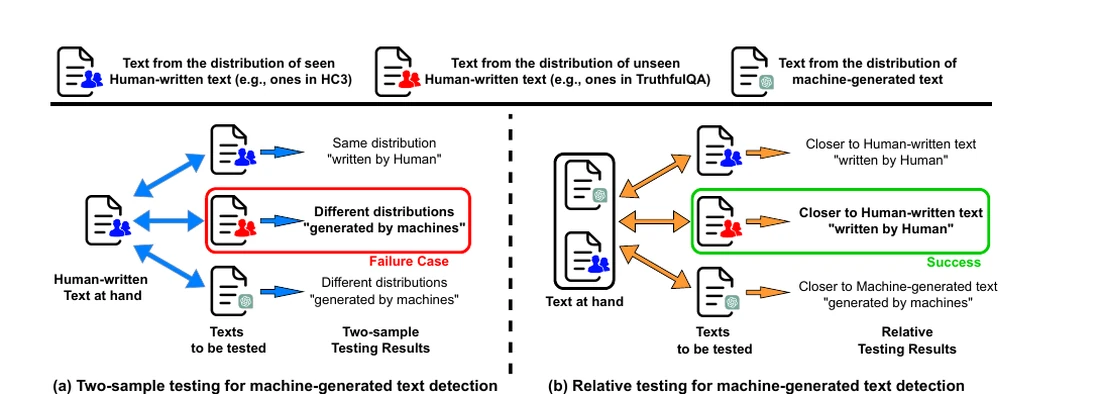
Two-sample testing versus relative testing · Figure 1
03 ICLR 2025
Deep Kernel Relative Test for Machine-Generated Text Detection
Yiliao Song, Zhenqiao Yuan, Shuhai Zhang, Zhen Fang, Jun Yu, and Feng Liu
This work reframes machine-generated text detection as a relative hypothesis test: is a text distribution closer to human or machine references? A learned deep kernel improves test power while reducing false positives when human writing shifts from the seen distribution.
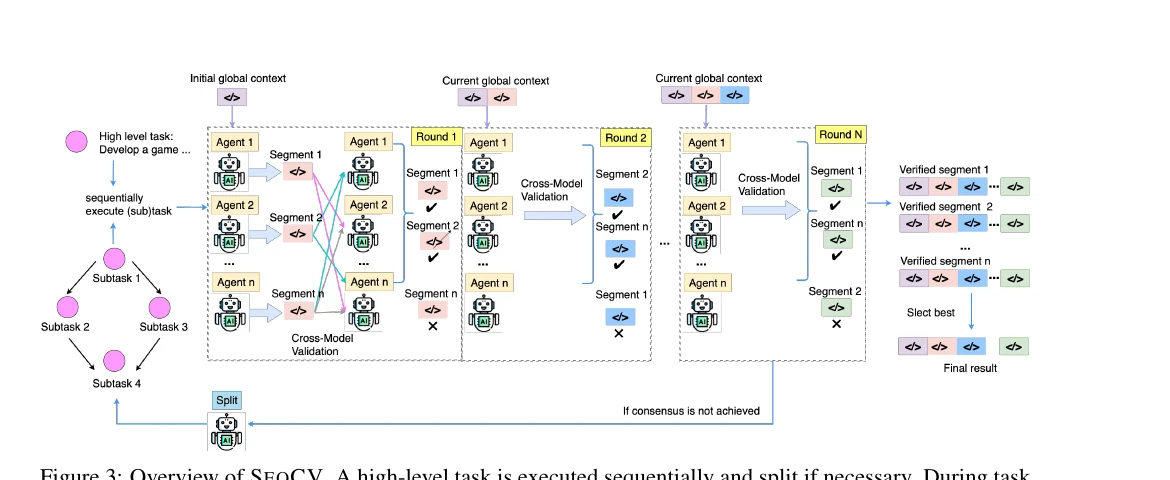
Can Dependencies Induced by LLM-Agent Workflows Be Trusted?
Yu Yao, Yiliao Song, Yian Xie, Mengdan Fan, Mingyu Guo, and Tongliang Liu
SeqCV addresses inter-agent misalignment when workflow dependencies cannot be treated as conditionally independent. It executes subtasks sequentially, validates response segments across models, and recursively splits inconsistent subtasks.
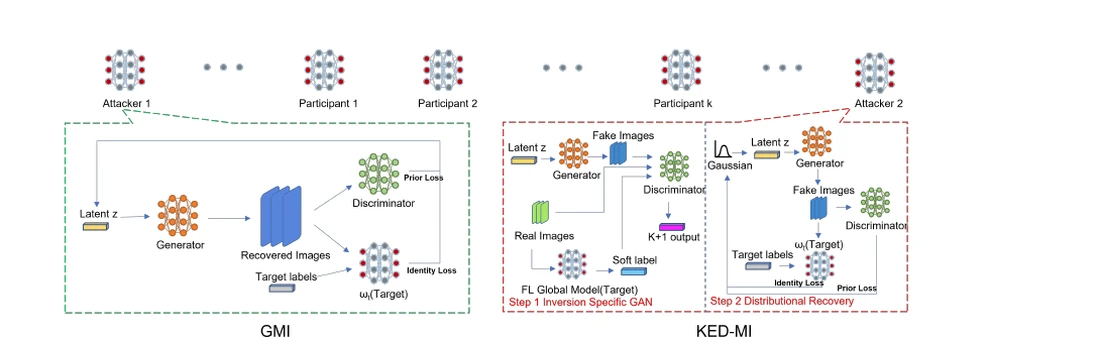
Model inversion attacks against federated learning · Figure 2
05 ICLR 2024
FedInverse: Evaluating Privacy Leakage in Federated Learning
Di Wu, Jun Bai, Yiliao Song, Junjun Chen, Wei Zhou, Yong Xiang, and Atul Sajjanhar
FedInverse evaluates whether a federated global model leaks participant data through model inversion. Its HSIC-based regularisation diversifies the attack generator, revealing privacy risks that may remain hidden behind apparently benign clients.
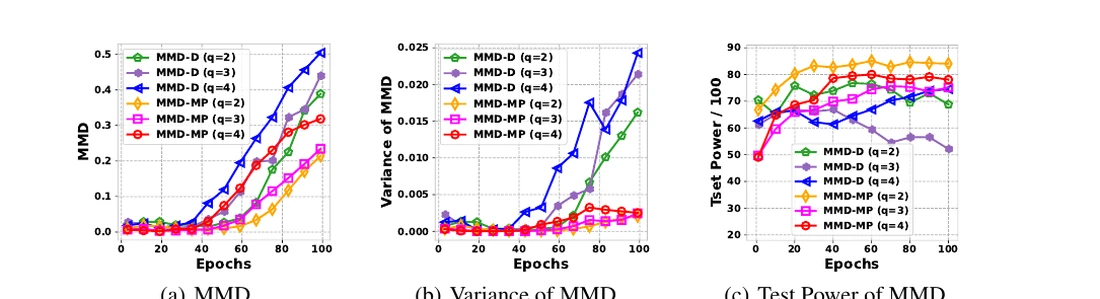
MMD stability and test power during optimisation · Figure 1
06 ICLR 2024
Detecting Machine-Generated Texts by Multi-Population Aware Optimization for Maximum Mean Discrepancy
Shuhai Zhang, Yiliao Song, Jiahao Yang, Yuanqing Li, Bo Han, and Mingkui Tan
MMD-MP targets the variance inflation caused by machine-generated text from multiple LLM populations. Its multi-population-aware objective learns a more stable kernel for paragraph- and sentence-level detection.
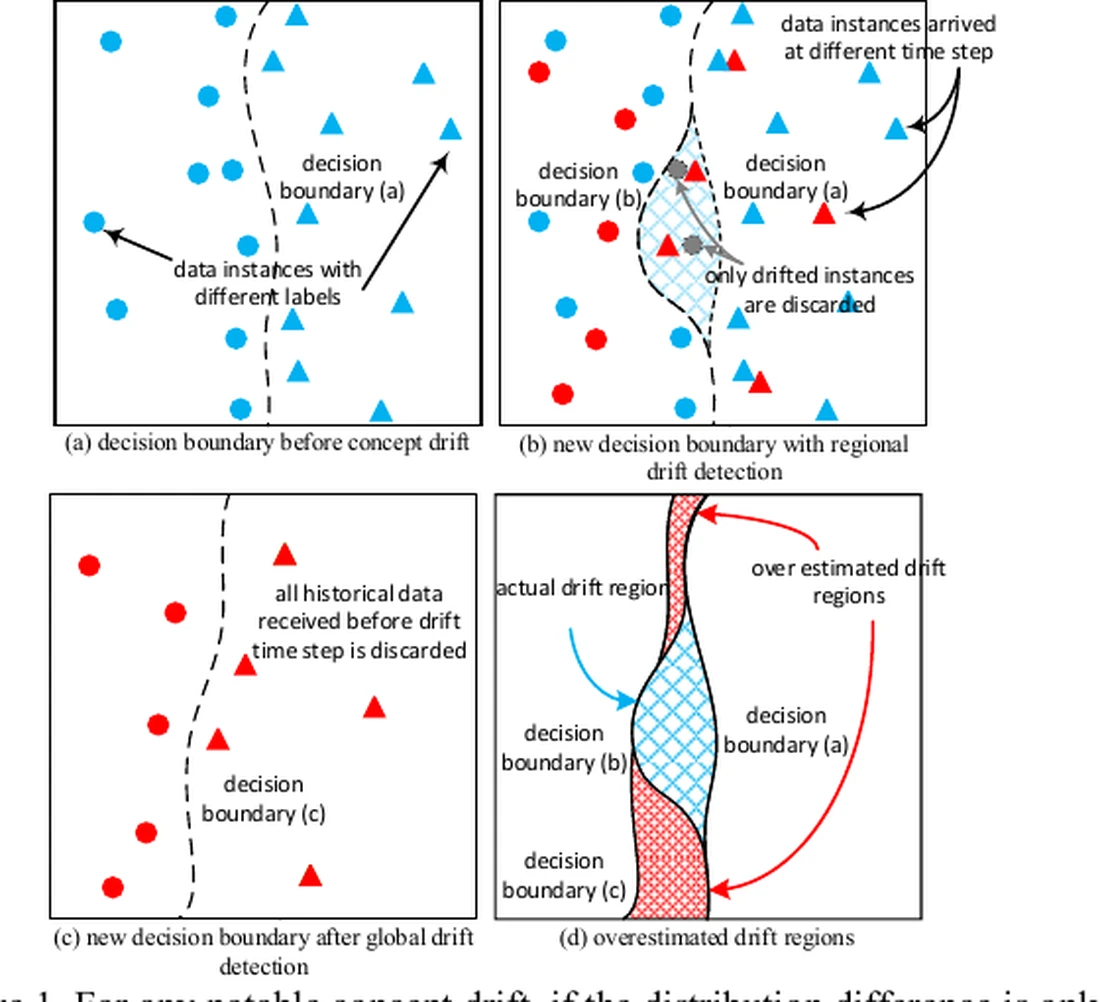
Regional versus global drift adaptation · Figure 1
07 IJCAI 2017
Regional Concept Drift Detection and Density Synchronized Drift Adaptation
Anjin Liu, Yiliao Song, Guangquan Zhang, and Jie Lu
This paper introduces regional concept drift detection and density-synchronised adaptation. It identifies where drift occurs and updates the learner with relevant samples, avoiding the overestimation and unnecessary retraining caused by global adaptation.
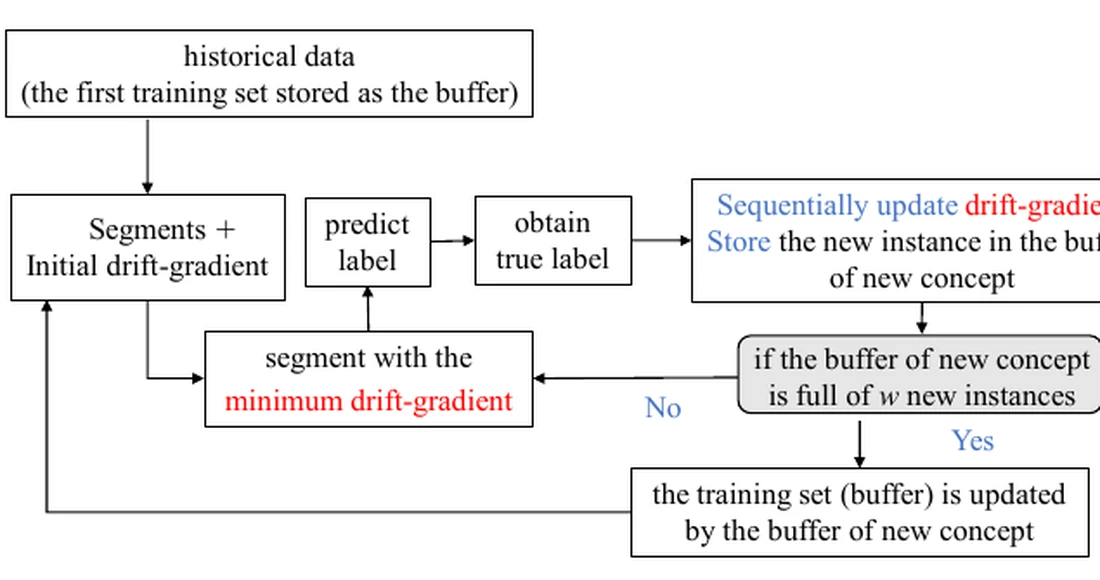
A Segment-Based Drift Adaptation Method for Data Streams
Yiliao Song, Jie Lu, Anjin Liu, Haiyan Lu, and Guangquan Zhang
SEGA introduces a sequentially updated drift gradient that scores which historical segments remain most relevant as each new instance arrives. It reduces adaptation delay by updating predictors with selected segments instead of waiting for a complete batch.
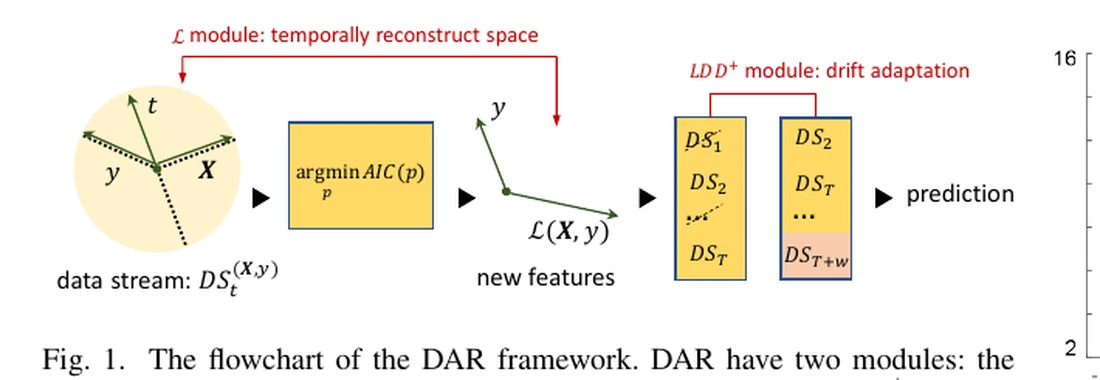
Learning Data Streams with Changing Distributions and Temporal Dependency
Yiliao Song, Jie Lu, Haiyan Lu, and Guangquan Zhang
DAR learns from streams that exhibit both changing distributions and temporal dependence. It reconstructs the feature space and uses LDD+ to remove outdated instances, supporting robust online regression under two simultaneous forms of non-stationarity.
Fuzzy Clustering-Based Adaptive Regression for Drifting Data Streams
Yiliao Song, Jie Lu, Haiyan Lu, and Guangquan Zhang
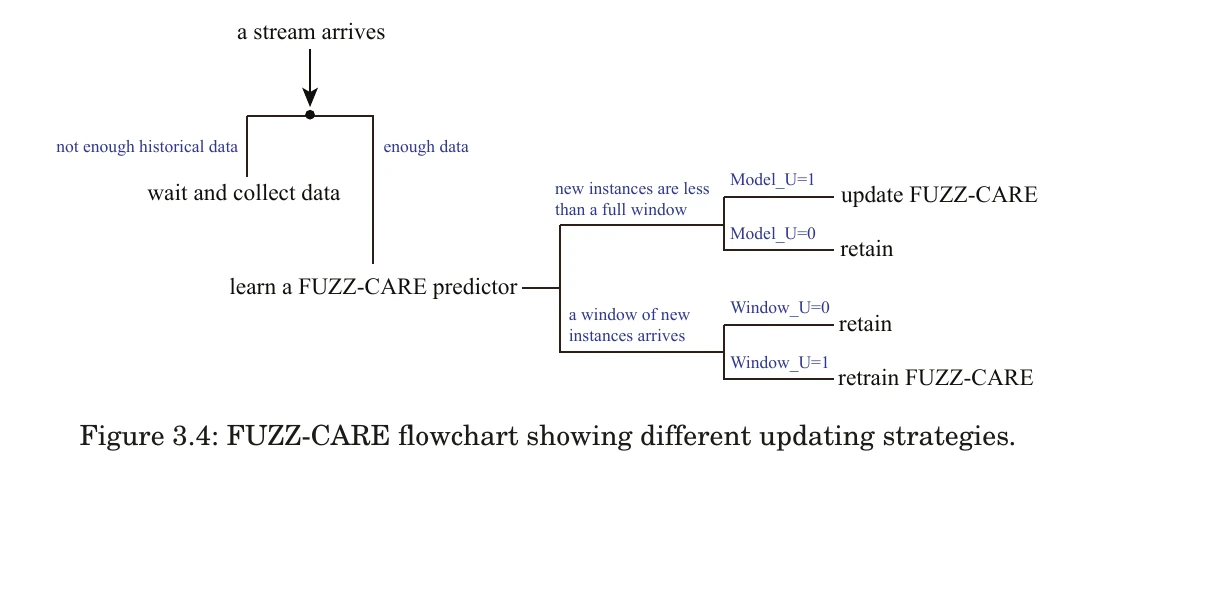
FUZZ-CARE uses fuzzy clustering to identify latent patterns in a drifting stream and assign membership degrees to individual instances. It fits pattern-aware regression models so predictions can follow recurring or overlapping concepts.